
July 28, 2026 · 3 min read · Saint's Keep
The Letters on the St. Benedict Medal, Decoded
What every letter on the St. Benedict medal means — Latin, English, Metten Abbey, and why it is a sacramental, not a charm.
What the medal is
The St. Benedict medal is covered in letters because those letters are a prayer. They compress a medieval Latin formula — Vade Retro Satana — into initials that fit a Cross and a circular border. Catholics have worn and hung this medal for centuries as a sacramental: a Church-blessed sign, not a piece of jewelry with a mood.
If you searched “St. Benedict medal meaning,” you have probably been served gift-shop copy. This page is the decode without the superstition.
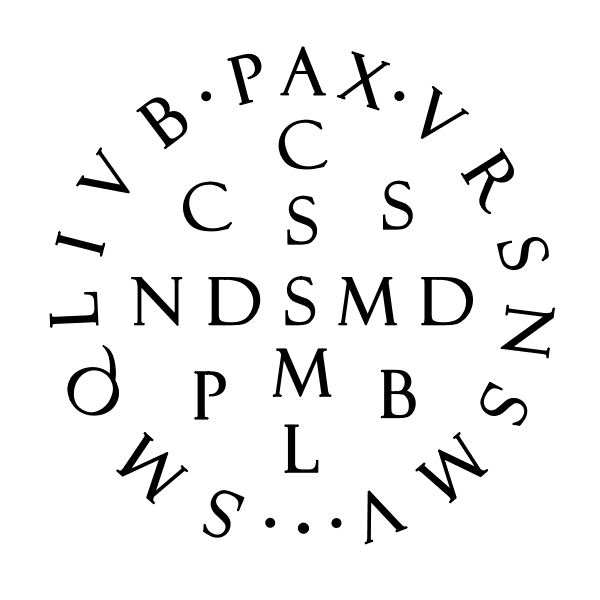
- CSSMLVertical beam
- NDSMDHorizontal beam
- CSPBAngles of the Cross
- VRSNSMV · SMQLIVBBorder — Vade Retro Satana
- PAXAbove the Cross
The front: Benedict, cup, and raven
On the face of the medal, St. Benedict usually stands holding a Cross (or staff) and the Rule. Beside him appear the broken cup and the raven — signs from his life: poison that could not take him, and a bird that carried away tainted bread. Around or near him you will often find the letters CSPB.
| Initials | Latin | Meaning |
|---|---|---|
| CSPB | Crux Sancti Patris Benedicti | Cross of our holy father Benedict |
The face says who he is. The reverse says what the Cross does.
The Cross: CSSML and NDSMD
The reverse is dominated by a Cross. Down the vertical beam run CSSML. Across the horizontal beam run NDSMD.
| Initials | Latin | English |
|---|---|---|
| CSSML | Crux Sacra Sit Mihi Lux | May the holy Cross be my light |
| NDSMD | Non Draco Sit Mihi Dux | Let not the dragon be my guide |
Dragon, not a softened “devil”
Draco means dragon. Many popular translations write “devil” instead. We keep dragon. The line refuses a guide who is the ancient serpent — the same combat imagery under St. Michael’s feet and on the Michaelmas page. Softening the word severs that link. The enemy is the devil; the Latin image is the dragon.
In the angles of the Cross, the Jubilee form places the four letters of CSPB again — one in each quadrant — so the Cross of Benedict frames the prayer.
The border: the exorcism formula
Around the rim run two chains of initials. Together they are the heart of Vade Retro Satana.
| Initials | Latin | English |
|---|---|---|
| VRSNSMV | Vade Retro Satana, Nunquam Suade Mihi Vana | Get behind me, Satan; never persuade me of vain things |
| SMQLIVB | Sunt Mala Quae Libas, Ipse Venena Bibas | The things you offer are evil; drink the poison yourself |
The first half echoes Christ’s rebuke. The second refuses the cup the enemy offers — poison dressed as sweetness. Read the full Latin and our original English on the Scriptorium page: Vade Retro Satana.
PAX or IHS at the top
Above the Cross, many medals bear PAX (peace) or the Christogram IHS. Peace here is not a vague mood. It is the peace of the Cross — order under Christ, not a truce with the dragon.
Where the formula comes from
The letter-formula is recorded in a 1415 manuscript at Metten Abbey in Bavaria. The initials have appeared on St. Benedict medals since at least 1780. The common modern form is called the Jubilee Medal.
You will also hear a 1647 Bavarian witch-trial origin story, and a claim that the Jubilee Medal was struck in 1880 for the 1400th anniversary of Benedict’s birth at Montecassino. Both circulate widely. Both may be true. Neither is asserted here without a primary source. The Metten manuscript and the medal’s documented use of the initials are the clean facts.
What the medal is — and is not
The St. Benedict medal is a sacramental. It is not an amulet.
Sacramentals dispose the soul for grace through the prayer of the Church and the faith of the one who uses them. They do not replace Confession or the Eucharist. They do not “work” like a device. A medal in a drawer while a man clings to mortal sin is not a strategy.
Treating the letters as magic — as if Latin initials compelled spiritual results apart from God, the Church’s blessing, and a converted life — is superstition. Say it plainly: that is the question honest readers actually have.
The enemy named in the formula is the devil, never a category of people. For the difference between a sacrament and a sacramental, see Sacrament vs. Sacramental. For major versus minor exorcism, and why the medal’s blessing belongs with the Church’s ordinary sacramentals rather than the solemn rite reserved to the bishop’s authority, read that entry. The blessing text stands in the Rituale Romanum.
How to have one blessed
Ask a priest. The blessing of the St. Benedict medal is provided in the Roman Ritual. Bring the medal; ask specifically for that blessing if you want the traditional form. Then wear it, hang it, or keep it where your hand finds it — and live as if the Cross is your light and the dragon is not your guide.
Start the rule of life the medal points toward: The Rule of St. Benedict for Laymen. Hear the formula sung: Harpa Dei’s setting is linked from the Vade Retro Satana page.
From the Armory
St. Benedict Medal
Saint of the Day
A short daily reflection in your inbox.